The Timed Paradox of Lutsk
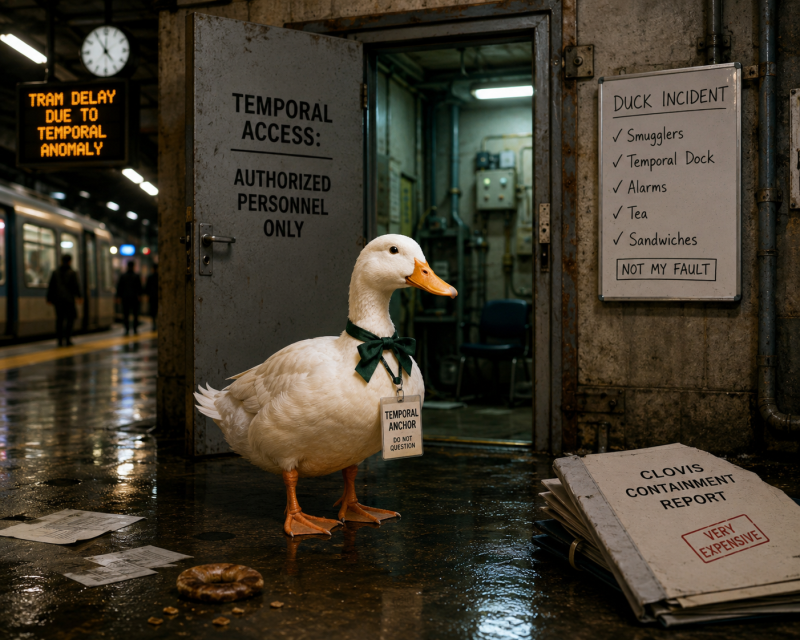
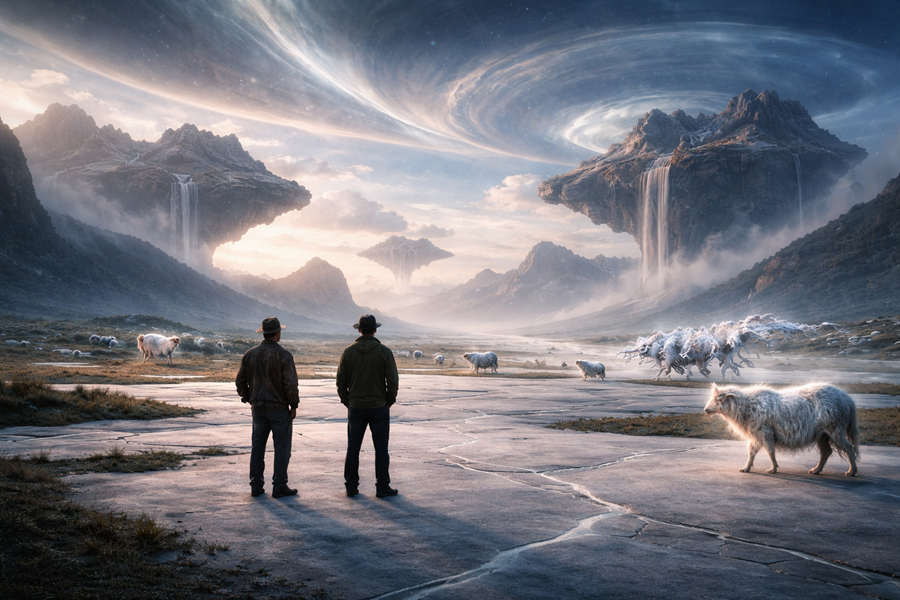
I was sent to Lutsk for the weekend because, according to Clovis, there was “minor temporal leakage around a major medieval structure.”
This is how Clovis describes things when they want you to pack light and not ask about danger pay.
The actual report was more interesting.
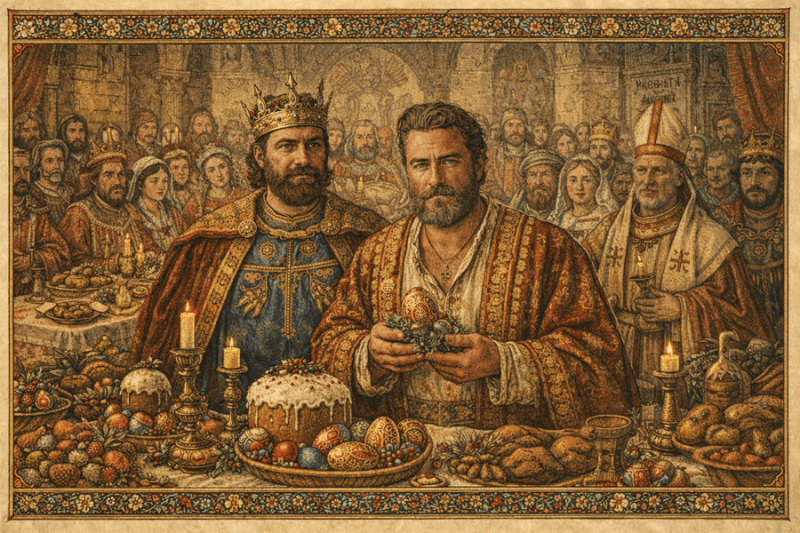
People had been seeing medieval-looking figures inside Lubart’s Castle. Not actors. Not tour guides. Not a festival. A woman with a basket near the wall. A guard standing under one of the towers. A boy carrying firewood across the courtyard. They appeared for several seconds, looked as confused as everyone else, and then vanished.
No mist.
No screaming.
No dramatic ghost behavior.
Just ordinary people from the wrong century briefly visiting Lutsk on a weekend they had not personally booked.
I arrived from Lviv on Friday evening, tired enough to believe almost anything and hungry enough to forgive most things.
Lutsk immediately felt like a city built in layers. The modern streets were there, of course, with cafés, traffic, lights and people walking home from work, but the older city still pressed through everything. You could feel it most strongly near the castle, where the brick towers rise above the old town like they have been watching travelers make poor decisions for hundreds of years.
Lubart’s Castle is the great landmark of Lutsk. It began as a medieval fortress in the time of Prince Lubart, connected with the Grand Duchy of Lithuania and the old history of Volhynia. Its red brick walls, towers and wide inner courtyard make it one of those places where history does not feel locked behind glass. It feels like it is standing beside you, quietly waiting for you to notice it.
Which, in my case, was unfortunate.
Because history noticed me first.
I reached the castle shortly before closing and saw the anomaly within twenty minutes.
Near one of the walls, a young man in medieval clothes appeared carrying a bundle of wood. He took three steps, stopped, stared at a tourist holding a phone, stared at the phone, stared at the tourist again, and vanished.
The tourist lowered her phone.
I lowered my scanner.
Neither of us said anything useful.
So that was Friday.
Mystery confirmed.
Reality behaving badly.
No dinner because the investigation had already started in that inconvenient way where you promise yourself you will eat later and then later becomes midnight.
I went to the hotel, opened the Clovis case file, and wrote my first note:
“Not ghosts. Probably. Wood guy looked too annoyed.”
Saturday began properly.
With coffee.
I found Good Morning, which was exactly the kind of place you hope to find in a city during a field assignment. It is a Lutsk coffee chain with its own roasting, its own bakery and the general atmosphere of a place that understands the serious emotional responsibility of breakfast.
I ordered a large flat white.
Then a filter coffee.
Then syrnyky.
Then two waffles with condensed milk.
Then another coffee because at that point I was no longer drinking coffee, I was constructing a defensive barrier against time travel.
Good Morning had the cheerful, efficient energy of a place used to people arriving half-asleep and leaving with opinions. I sat by the window, reviewed the photos from the reports, and tried to build a pattern.
The problem was that there was no obvious pattern.
The appearances were not marching in sequence. No parade of medieval soldiers. No repeated battle. No single dramatic loop.
Just fragments.
A woman with bread.
A guard.
A boy.
A horse once, according to one witness, although the witness admitted the horse “looked offended,” which is not a useful scientific measurement.
After coffee, I spent the day between the castle, the old town and every possible record I could find. The castle itself gave me the first clue. All sightings were inside or very close to its old walls. The second clue came from timing. Nobody saw anything in the morning. Nobody saw anything at noon. The appearances happened near sunset.
Not exactly sunset.
Near it.
That made the case more annoying.
Temporal anomalies should be required to keep schedules.
By mid-afternoon I had also found a third clue. The strongest sightings happened when the Moon was already visible before the Sun had completely disappeared. Not a full moon. Not even a proper blue moon in the calendar sense. But the scanner kept recording a cold blue reflection at the edge of the readings, as if the light itself had been filtered through something old and stubborn.
So the working theory became:
Sunlight plus early moonlight plus castle stone equals confused medieval people.
This is the kind of sentence that makes you wonder why you did not become a florist.
By evening I had enough data to know I needed to be at the castle again at sundown.
But before that, I needed dinner.
I went to misto.cafe.
And I immediately understood why people talked about it.
misto.cafe is not just a café. It is a social-impact place in the city center, created by people who wanted a café to do more than serve good food. It has this bright, modern, welcoming atmosphere, the kind of space where you can come for coffee, lunch, events, work, or an accidentally enormous meal before removing an impossible stone from a medieval fortress.
The menu also felt very Lutsk in the best way: Volyn flavors, Crimean Tatar dishes, modern café food, good coffee, desserts, and the dangerous feeling that ordering “just one more thing” is a perfectly rational plan.
I ordered Volyn pâté.
Then chibereki.
Then something sweet.
Then coffee.
Then another coffee.
The waiter looked at the table, then at me, then at the notebook full of castle diagrams.
“Work?” he asked.
“Something like that,” I said.
This was technically true.
During dinner I finally saw the missing part.
The sightings were not caused by the castle itself. The castle was acting like a frame. The real source was smaller, probably buried or embedded in the old masonry. Something absorbing light at sunset and releasing it as temporal resonance.
A stone.
Of course it was a stone.
It is almost always a stone, a mirror, a key, a bell, or one deeply suspicious spoon.
I returned to the castle before sundown with a containment case, a stabilizer and the quiet hope that no horses would appear inside me.
The air changed first.
That is how these things usually begin.
The sound of the city softened. The courtyard seemed to stretch very slightly, as if it had taken a breath and forgotten how large it was supposed to be. The last sunlight touched the brick walls. A pale blue moon stood above the old town.
Then the past arrived.
A man in a long coat appeared near one of the towers. A woman carrying bread appeared by the wall. A guard stood in the courtyard with one hand on his weapon, staring at me with the expression of someone who had never seen a waterproof jacket and already disliked it.
They were not ghosts.
They were not memories.
They were real people, briefly sharing the same place from another time.
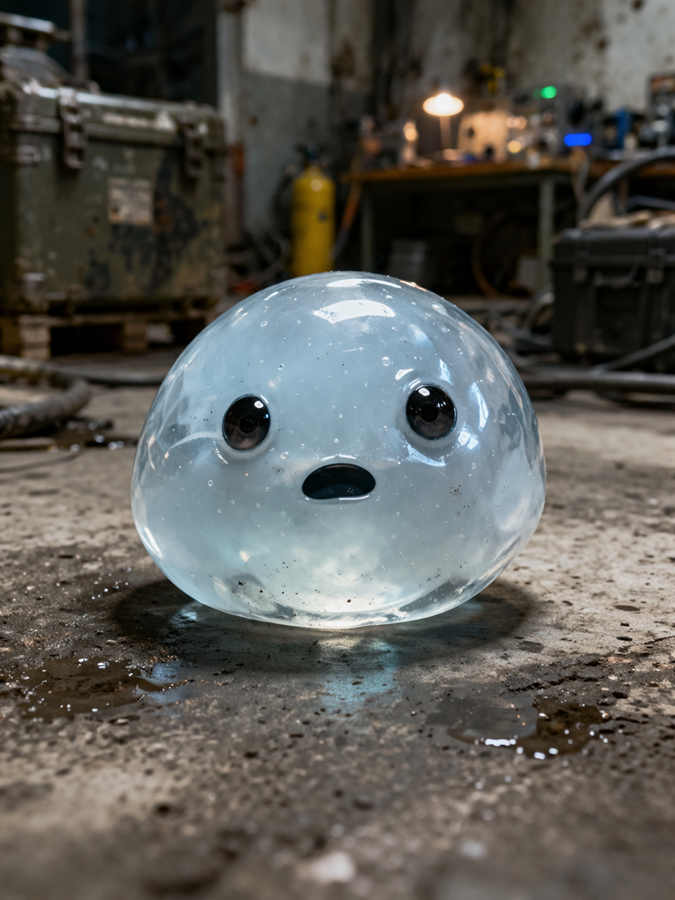
My scanner led me to a section of old stone near the foundation line, where the readings folded inward. Hidden behind the masonry was a dark blue mineral, smooth as river glass and cold enough to fog the air around it.
A Chronolith Fragment.
Rare.
Annoying.
Very much not supposed to be under a tourist attraction.
The fragment had probably been dormant for centuries. Then some recent shift, restoration work, vibration, weathering, or simple bad luck had exposed it to just enough light. At sunset, when the Sun hit the stone from one angle and the Moon caught it from another, it opened a temporary overlap between Lutsk now and Lutsk then.
Not a portal.
Not exactly.
More like two pages of history pressed together so tightly that ink started bleeding through.
I set the stabilizer.
The guard shouted something I did not understand.
The woman with bread shouted something at the guard.
A few seconds later a horse appeared. Not the entire horse. Just the front half. The rear half arrived shortly afterward. Time anomalies are rarely elegant.
I removed the stone.
For one second, every brick in the castle seemed to glow blue.
Then the pressure snapped.
The courtyard returned to normal.
The medieval visitors disappeared.
The city sounds came back.
A child nearby asked his mother why “that man put a magic potato in a suitcase.”
I respect children. They understand fieldwork better than adults.
The Chronolith Fragment went into Clovis containment. The anomaly ended. The castle remained exactly where it belonged, in one century at a time.
Mostly.
I delivered the preliminary report that night, returned to the hotel, and slept like someone who had argued with architecture and won.
Sunday morning, naturally, I went back to misto.cafe.
This was for paperwork.
And breakfast.
And also because I had not yet tried enough of the menu to make a scientifically responsible judgment.
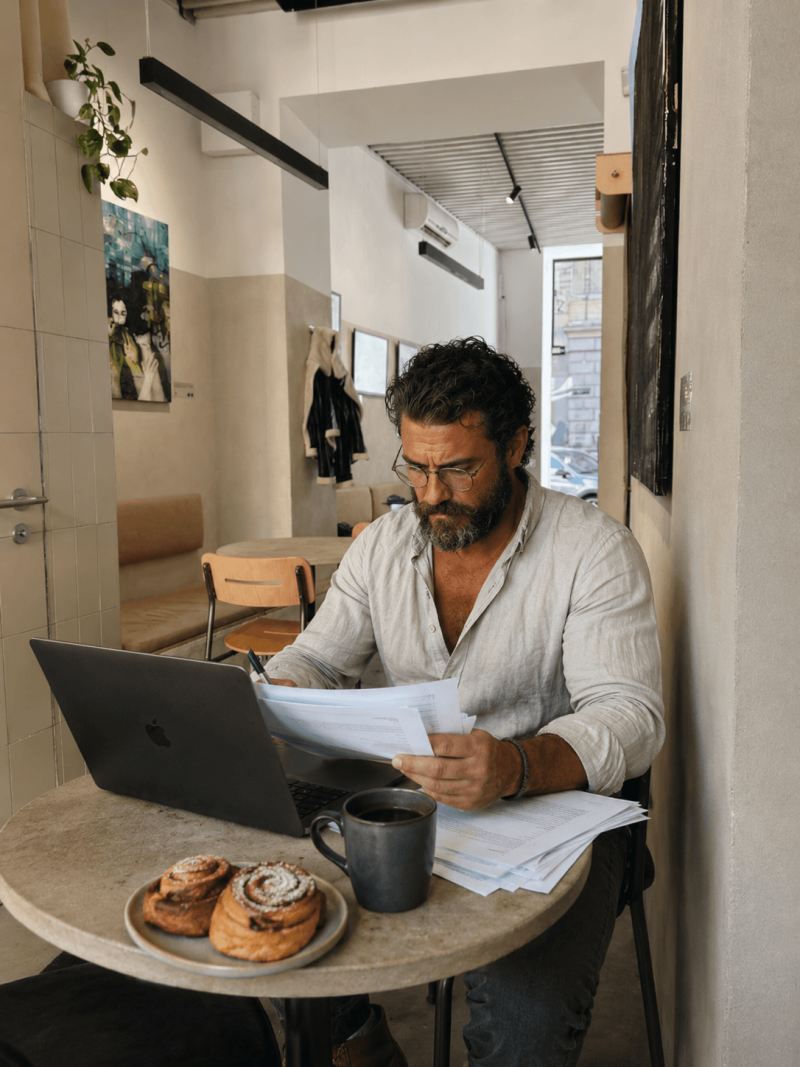
I chose a table, opened my laptop, placed the Clovis containment case beside my chair and ordered breakfast.
Shakshuka 2.0, with eggs in a tomato and pepper sauce, served with crisp bread.
Avocado toast 2.0, because apparently I had survived a time fracture and become the kind of person who orders avocado toast with professional seriousness.
Sweet syrnyky, because no Ukrainian weekend is complete without at least one dish that makes you question why anyone eats anything else.
Coffee.
Then another coffee.
Fresh juice, because I wanted the report to show responsible hydration.
The staff no longer seemed surprised by me.
This is always dangerous. Once a café accepts your presence, you can lose entire chapters of your life there.
I finished the first Clovis form.
Then the second.
Then the incident sketch.
Then the artifact chain-of-custody confirmation.
Then the special note explaining why the phrase “magic potato” should not be included in the official classification.
Clovis replied with three questions.
One scientist wanted the exact angle of the moonlight.
One archivist wanted to know whether any medieval witnesses had spoken.
One administrator wanted to know why I had expensed “breakfast, second breakfast, mission coffee, emergency coffee and stabilizing dessert.”
I ignored the administrator.
By late morning, misto.cafe had shifted from breakfast mood into lunch mood, and I had shifted from “I should leave soon” into “it would be irresponsible to travel hungry.”
So I stayed at the same table.
For lunch.
This was not laziness.
This was continuity.
I ordered more than necessary.
Again.
A proper lunch this time, with something warm, something local, something Crimean Tatar, coffee, and dessert. I told myself it was a final field assessment of the city’s culinary infrastructure.
The containment case sat quietly beside me.
No blue glow.
No humming.
No medieval baker suddenly appearing to ask for his bread back.
A good sign.
Before leaving, I wrote my final personal note:
“Lutsk stable. Castle stable. Stone secured. Food excellent. Recommend future monitoring, preferably during meal hours.”
Then I closed the laptop, picked up the case and finally left for Lviv.
The road back was quiet.
The Chronolith Fragment remained sealed.
The anomaly did not return.
Lubart’s Castle stayed behind in Lutsk, calm and solid, its towers holding their proper place above the old town.
But as I was leaving, I glanced back once more toward the city.
For a moment, only a moment, I thought I saw a figure on the castle wall.
A guard.
Not flickering.
Not glowing.
Just standing there.
He raised one hand.
Then turned away.
Maybe it was imagination.
Maybe it was the last echo of the overlap.
Or maybe somewhere, in some older Lutsk, a man in medieval clothes spent his weekend telling everyone about the strange traveler who came from nowhere, stole the blue stone, and ate like a prince before vanishing toward Lviv.
Honestly, I hope he did.
It would be rude if I were the only one writing the report.