An Unexpected Royal Visit (2)
We reached Kraków late, delayed at the border in the slow, familiar way that begins with routine questions and ends with someone quietly deciding to take a closer look at everything.
By the time we were through, the night had already folded into morning. Sora managed to sleep for exactly twenty minutes on the bus and woke up fully functional; I did not. The flight to Stockholm was uneventful, which in my line of work usually means we were being allowed to arrive, and from there we took the train north to Uppsala. Clean, quiet, efficient—Sweden doing what Sweden does best, as if nothing at all was wrong.
We checked into Clarion Hotel Gillet, where Clovis had already arranged everything, including a small conference room with 24/7 access. That detail alone told me how seriously they were taking this. Before locking ourselves in with transcripts and bad coffee, we did something almost normal and went for dinner at a nearby Belgian place, Bierhuis. Beer helps conversations like this—not because it makes them easier, but because it makes silence acceptable.
Frank joined us halfway through. He looked exactly as I remembered: relaxed, slightly amused, and entirely too comfortable for someone who had supposedly retired. At eighty-four, he moved slower than before, but not in any way that mattered. His eyes were as sharp as ever, and there was a quiet energy about him that made you forget his age within seconds. Southern Italy had not softened him; if anything, it had given him patience. “Nice to see you both again,” he said, sitting down as if this were a planned reunion. “It wasn’t planned,” I replied. He smiled. “It never is.”
We moved to the conference room shortly after, a quiet space that Clovis had stocked properly with transcripts, signal logs, frequency maps, and a few pieces of equipment that were not part of any Swedish system. Sora began working in silence, correlating patterns across the intercepted communications, while Frank read everything once and then again more slowly, as if confirming something only he could see. I listened—not to the room, but to the shape of the problem as it began to settle into something more defined.
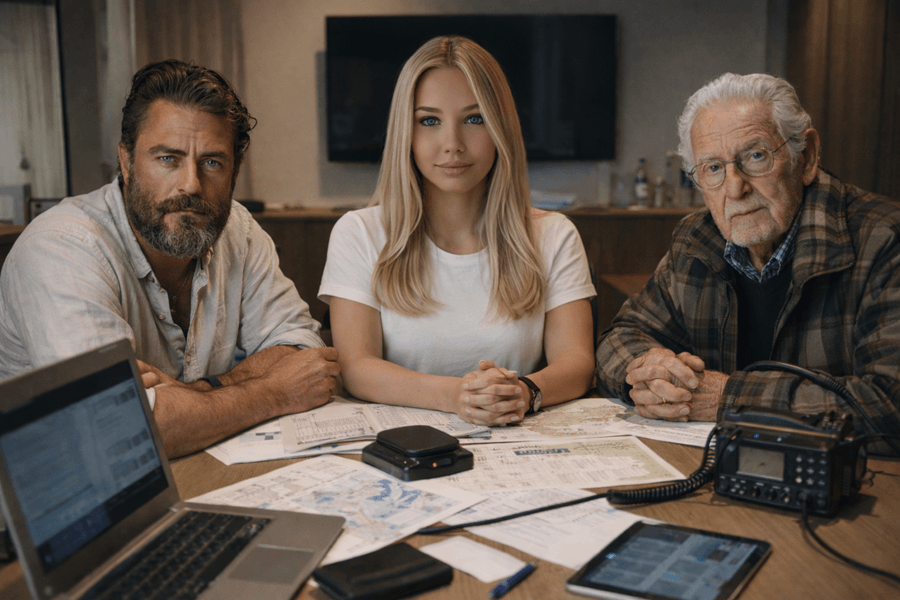
By midnight, the comfortable explanations were gone. No hackers, no spoofing, no adversary probing defenses. By one, only the uncomfortable possibilities remained, and by two, we had reached a conclusion—not proven, but solid enough to act on. Sora said it first, without drama: they were not trying to talk. Frank leaned back in his chair and finished the thought with quiet certainty: they were trying to arrive. I added the part none of us wanted to say out loud—that for some unknown reason, the Swedish military on the other side believed this was a valid entry point. No one used the word invasion, but it hung there anyway, fully formed. Because if one organized military force begins aligning itself into another version of its own territory, that is not an accident. That is intent.
The decision came not from agreement, but from necessity. Closing the connection immediately would be the simplest option, but also the most dangerous in ways we did not yet understand. You do not shut down something like this without consequences on the other side, and right now we knew nothing about who they were, what situation they were in, or why they were trying to reach this Sweden. So we chose the only reasonable path left: we would try to communicate first. One controlled exchange, one confirmation of intent, one chance to understand what we were dealing with. After that, we close the crack.
Tomorrow (or actually today as I'm writing this at 3:00) is Sunday. We will sleep late, then head to the nearest base where the signal overlap is strongest. Sweden is quiet tonight—orderly, predictable, safe. Somewhere else, it may not be.
— Marco