A Quiet Disturbance on Valova Street
I noticed her the moment I walked into Kredens on Valova, which already tells you something was wrong, because usually with things like that there’s a delay, a polite buffering from reality while your brain decides whether to accept what it’s seeing. This time there was no delay. Just a clean, immediate certainty that something in the room did not fully belong to it.
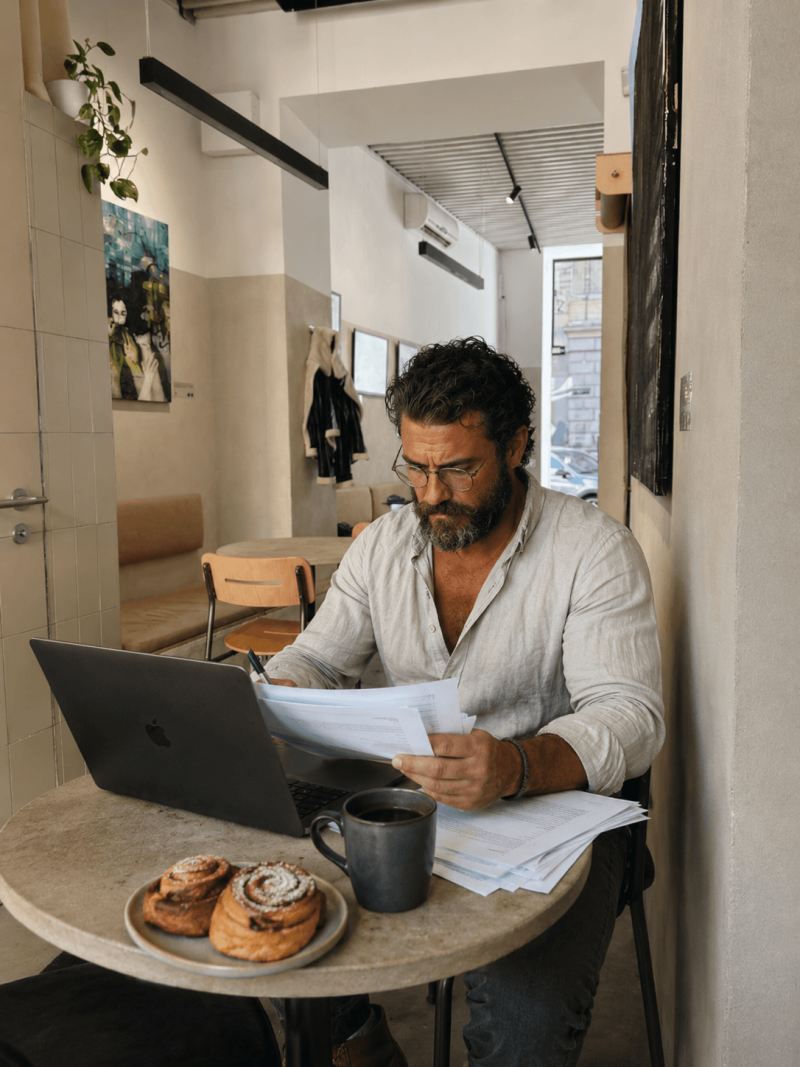
Late afternoon in Lviv, the kind where the light outside turns slightly golden but the air still carries that damp chill from earlier rain. Trams rattling nearby, tourists negotiating cobblestones like it’s a sport, the café door opening and closing in a steady rhythm that lets out bursts of roasted coffee into the street. Inside, warm light, low conversation, cups clinking, a small argument about politics near the entrance that nobody was really winning.
And in the middle of all that noise—
A quiet pocket.
Not silence. That would be obvious.
Just… less.
She was sitting by the window, notebook open, coffee untouched, watching the street with the kind of focus that doesn’t belong to casual observation. Black hair, simple clothes, everything about her calibrated to pass as normal at a glance. And it worked. That’s the dangerous part. If you didn’t look twice, you wouldn’t see anything unusual.
If you did—
The light around her wasn’t entirely committed to its job. It bent, just slightly, like it was reconsidering its path. People near her table adjusted their posture without knowing why. Conversations softened when they crossed her space. Reality, in small ways, deferred.
I took a step inside and stopped.
Not because of the crowd.
Because of her.
Velari.
Now, before you decide I’ve finally lost it and started labeling strangers for dramatic effect, let me give you the short version.
Velari are what happens when a being is no longer tied to a single version of reality.
They don’t travel like I do, with devices, timing, luck, and occasional poor decisions. They don’t open doors.
They decide where they are.
And then they are there.
Not by moving through distance, but by making distance irrelevant.
Not by bending matter, but by reminding it what it could be instead.
Time doesn’t exactly apply to them the way it does to us. It’s more like… a suggestion they can accept, adjust, or quietly step around if it becomes inconvenient.
If something is possible, they can reach it.
If something is unlikely, they can make it… less so.
If something should not happen—
they tend to notice.
That doesn’t mean they act on everything. That’s the important part.
Power like that isn’t loud. It doesn’t need to be. It sits there, perfectly calm, because it has nothing to prove.
They don’t dominate reality.
They outgrow the need to argue with it.
And most of the time, they choose not to interfere.
Not because they can’t.
Because they understand exactly what happens when they do.
So of course, one was sitting in a café in Lviv with a croissant she hadn’t touched.
Also—and I’m saying this purely for the sake of accurate reporting—
She was stunning.
Not in the loud, impossible way that announces itself. No. That would’ve been easier. This was the kind of beauty your brain initially files as “normal,” and then ten seconds later you realize you’ve stopped paying attention to anything else.
Which, combined with “can fold reality if annoyed,” is not a combination you ignore.
So I didn’t.
I walked over and sat down across from her.
She looked up immediately, like she’d been expecting me specifically, and gave a small, polite smile.
“Hello,” she said.
Her accent didn’t belong anywhere I could place.
I nodded toward the notebook.
“Taking notes on humanity?”
She watched me for a second, measuring something I couldn’t see, then closed it gently.
“You noticed,” she said.
I shrugged.
“You make the air quieter. That’s usually a sign.”
A soft laugh.
“My teachers said some humans here might notice.”
“Your teachers are optimistic,” I said.
She tilted her head slightly.
“You are not surprised.”
“I’ve learned not to be,” I replied. “What’s your name?”
“Aelena. Aelena Thal. I am twenty-one in your counting.”
“Marco.”
“I know.”
Of course she did.
“You walk loudly through realities,” she added gently. “It is difficult not to notice.”
“Fantastic,” I muttered. “My reputation is spreading.”
That made her smile again.
We talked. Not in the usual small talk way, but in that direct, slightly unsettling exchange where both sides skip the unnecessary layers. Elyra, her world. Similar continents, different history. Fewer large wars, more distributed knowledge, fewer empires. A world that learned to avoid catastrophic conflict early—and as a result, never truly understood it.
So she came here.
To study war.
Lviv, of all places.
“That’s a heavy field trip,” I told her.
“Yes,” she said simply.
There was no drama in it. Just intent.
At some point I stood up, because conversations like that require fuel, and came back with a tray that made her look mildly concerned.
“You ordered… many things.”
“First rule of our Earth,” I said, setting it down. “Don’t analyze us on an empty stomach.”
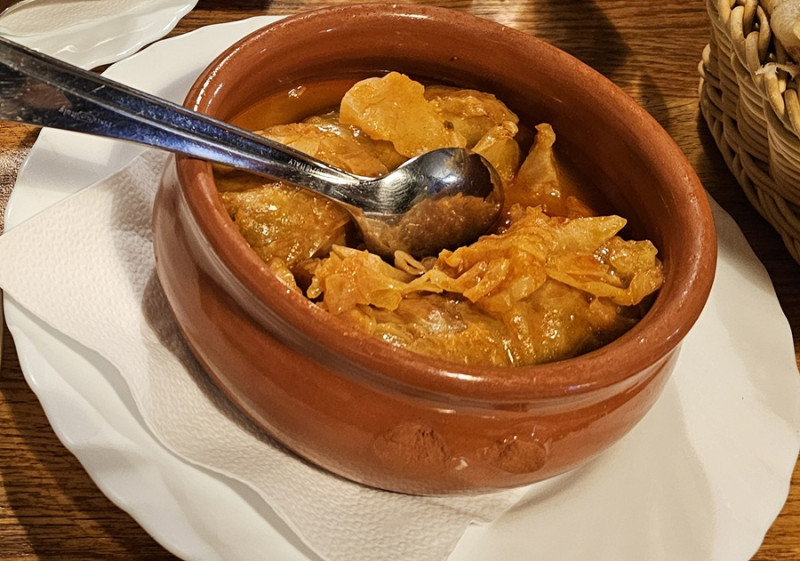
Flat white, croissant, syrnyk, sandwich. A small, edible overview of human priorities.
Watching her interact with food was unexpectedly fascinating. The careful examination, the first cautious sip, the moment of genuine surprise.
“This is… good,” she said about the coffee, like she hadn’t fully trusted the concept until now.
The croissant disintegrated properly.
“I believe I broke it,” she said.
“That means you did it right.”
The syrnyk paused her completely.
She stared at it after the first bite.
“Humans created this during periods of conflict?”
“More or less.”
She wrote something down.
I didn’t ask.
The sandwich required explanation.
“You place meat between bread?”
“Welcome to our Earth.”
She processed that longer than expected.
Then came the theory.
“War may exist partly because your species has too many calories.”
I laughed loud enough to earn looks.
“You might be onto something.”
We stayed longer than planned. The café shifted around us, people coming and going, the light outside dimming into evening, the city slipping into that soft glow that makes even tired places feel alive again.
Eventually we stepped out together.
No dramatic transition. Just two people leaving a café, except one of them could step out of reality if she felt like it.
We walked through the old town without a clear destination, which is the only correct way to experience Lviv. Rynok Square opening up around us, wet stones reflecting light, street musicians adjusting their instruments, conversations drifting from table to table. The smell of coffee never really leaves this city; it just changes intensity.
She watched everything.
Not like a tourist.
Like someone building a model.
“These cities,” she said at one point, looking around slowly, “they carry memory in their structure.”
“They also carry bad wiring and questionable decisions,” I said.
“That too,” she agreed.
We talked about the city, about history layered on itself, about how places survive by adapting just enough without losing what they were. She asked why people stay in places that hurt them. I told her because leaving hurts too, just differently.
She didn’t write that one down.
By the time we circled back toward the center, the night had settled fully, warm lights in windows, quieter streets, the kind of calm that feels earned.
That’s when I made the practical suggestion.
“You should stay at the Ibis,” I said. “Simple place. Stable. Good for… observing without accidentally influencing too much.”
She looked at me, considering.
“You are inviting me to remain near you.”
“I’m inviting you to not accidentally bend half the city while studying it,” I replied. “Also, it has decent breakfast.”
A small pause.
“You are curious,” she said.
“Occupational hazard.”
“And dinner?” I added, because not asking would’ve been a mistake.
She tilted her head again, that almost-smile returning, something lighter in it now.
“Not tonight,” she said softly. “I need to understand today first.”
Fair.
Then she leaned just slightly closer, and the air around us responded again, that subtle shift, that quieting.
“Maybe tomorrow, Marco.”
And she winked.
Not accidentally.
Deliberately.
Then we didn’t part in the street like people usually do. Instead, we walked together toward the Ibis, the city gradually quieting behind us, the kind of late evening where Lviv feels like it’s holding its breath between conversations. The lobby was warm, softly lit, the receptionist already halfway into the routine of ending a shift, the quiet hum of a place that has seen too many ordinary nights to expect anything unusual.
Aelena stepped forward and asked for a room.
Simple. Direct. No hesitation.
The receptionist gave the standard polite answer, the one that comes from habit rather than checking the system.
“We’re full tonight.”
Aelena tilted her head slightly, not confused, not challenging, just… adjusting something invisible.
“I know there is a room,” she said calmly.
No pressure. No insistence. Just certainty.
The kind of certainty that doesn’t argue.
There was a pause. A small one. The receptionist glanced back at the screen, frowned slightly, tapped a few keys, and then her expression changed in that subtle way people do when reality quietly corrects itself around them.
“Oh—yes. We do have one available.”
Of course they did.
Aelena nodded as if this outcome had never been in doubt, and then came the part I’ve learned never to question too deeply. She reached into her bag, and for a fraction of a second there was nothing there. Then there was.
Cash.
Neatly folded. Local currency. Entirely appropriate for the situation, like it had always existed specifically for this moment and simply waited to be noticed.
She handed it over. Transaction complete. No anomaly left behind for anyone except the one person who knew to look.
Key card received.
Reality closed its loop.
She turned back to me, standing there like this was just another evening, just another hotel, just another completely normal check-in that didn’t involve existence adjusting itself to match her expectations.
“Goodnight, Marco,” she said, that same soft tone, but now with something lighter underneath it.
“I will be in touch.”
Which, in human terms, usually involves exchanging phone numbers, messages, maybe an awkward pause while someone pretends they don’t care too much.
With a Velari, it means something else entirely.
It means she will decide we are talking again.
And then we will be.
I nodded, because that’s really all you can do.
“Tomorrow, maybe,” I said.
She smiled, just a little, like that word didn’t quite mean the same thing to her, then turned and walked toward the elevator, disappearing in the most ordinary way possible, which somehow made it even less ordinary.
I stayed there a moment longer, just long enough to confirm that everything had settled back into place, that the lobby was once again just a lobby, that the night had resumed its expected rhythm.
Then I headed up to my own room, already knowing that “maybe tomorrow” was not a question of scheduling.
Just of timing.
So here’s your note, dear reader—
If you ever sit in a café and feel the world go just a little quieter around one table, like the noise is choosing to step back—
You might not be imagining it.
You might simply be near a Velari.
And if you are—
Try not to ignore it.
— Marco