Sunday, Lviv — Recovery, Coffee, and a World Where Bananas Are Mined
I woke up late.
Not dramatically late. Just the kind of late where the light is already confident, the city has been alive for hours, and your head reminds you, gently but persistently, that the last two days existed and had opinions.
Lviv does not judge you for this. That is one of its best qualities.
I stepped out into the soft hum of the morning, the cobblestones still holding a bit of last night’s coolness, and made my way to coffee. Not because I wanted it. Because I needed it in a very structured, almost contractual sense.
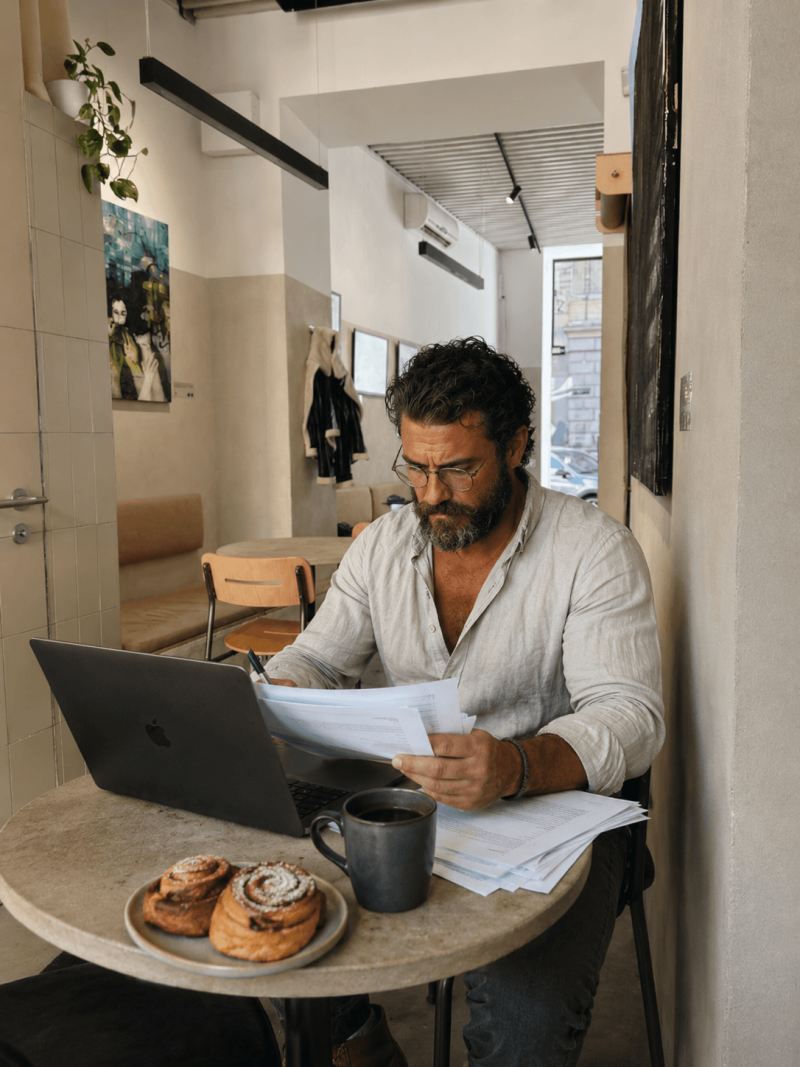
First stop was a small place just off the main flow near the Opera. The kind where the door closes with a proper wooden sound and the air is thick with roasted beans and something faintly sweet. I ordered a filter coffee. Clean, patient, forgiving.
It arrived in a simple cup, dark but not aggressive. The first sip was exactly what I hoped for: warm, steady, slightly nutty, with a soft acidity that felt like someone opening a window inside my head. No bitterness, no drama. Just quiet repair.
I sat there longer than necessary.
Outside, people moved with purpose. Inside, time slowed just enough to let me exist again as a functional organism.
By the second coffee, I was ready for food.
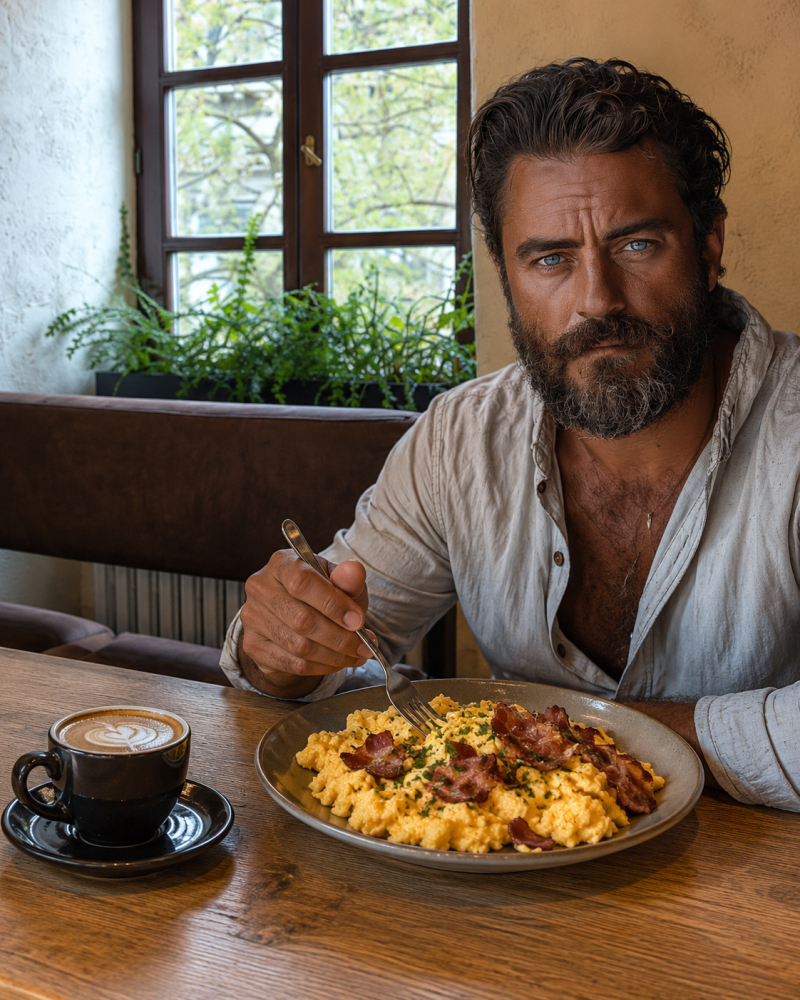
I found a place that understood eggs properly. You can tell immediately. I ordered scrambled eggs with butter, fresh bread, and tomatoes, and they arrived soft, almost custard-like, pale yellow, glistening slightly. Not overworked. Not dry. Just held together enough to be eaten with a fork, melting the moment they touched the tongue.
The bread was still warm, with a crisp crust and a soft interior that absorbed the butter like it had been waiting for this exact purpose. The tomatoes were simple, fresh, slightly sweet, with just enough salt to wake them up.
I added a second coffee. Espresso this time. Short, sharp, and direct. It did not ask how I felt. It simply fixed things.
By midday, Lviv had fully unfolded.
I walked without destination. Past the Opera, along streets that curve just enough to feel intentional, past balconies with plants that looked like they had stories of their own. The city carries its age lightly. Not as weight, but as texture.
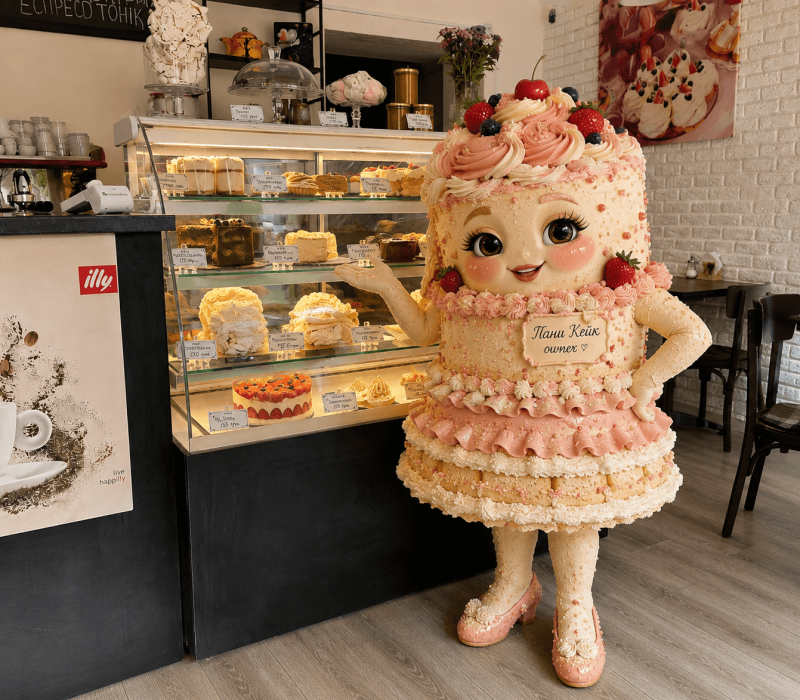
Somewhere along the way, I stopped again. For cheesecake. I am not proud of the frequency, but I am consistent.
This one was dense but not heavy, with a smooth interior and a slightly caramelized top. A hint of vanilla, a touch of lemon, balanced perfectly. The kind of cheesecake that does not try to impress you, because it already knows it will.
Another coffee followed. Of course.
By late afternoon, I reached that quiet equilibrium where the world stops tilting and becomes stable again. The hangover, which had introduced itself so confidently yesterday, retreated into something distant and irrelevant.
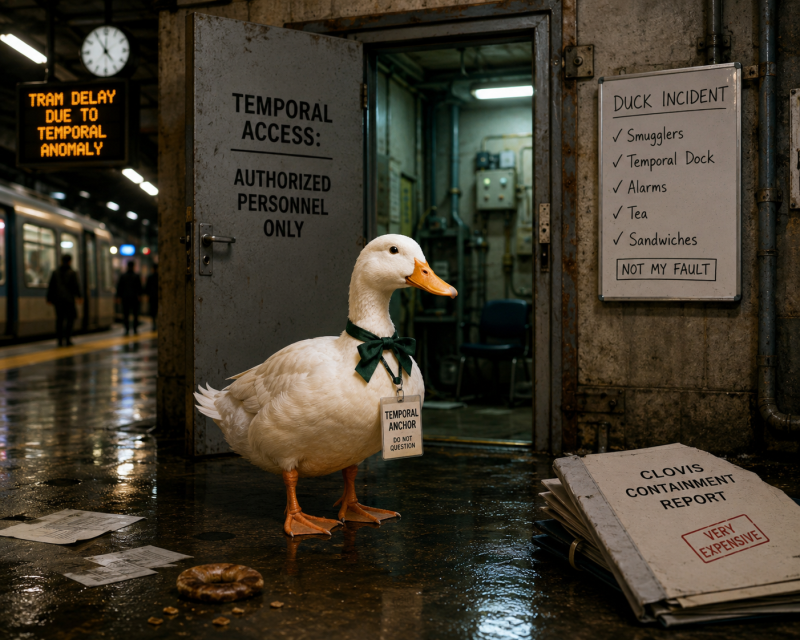
I considered going to the Clovis outpost. There is always something waiting. There is always a reason to leave.
Today, there wasn’t.
So I didn’t.
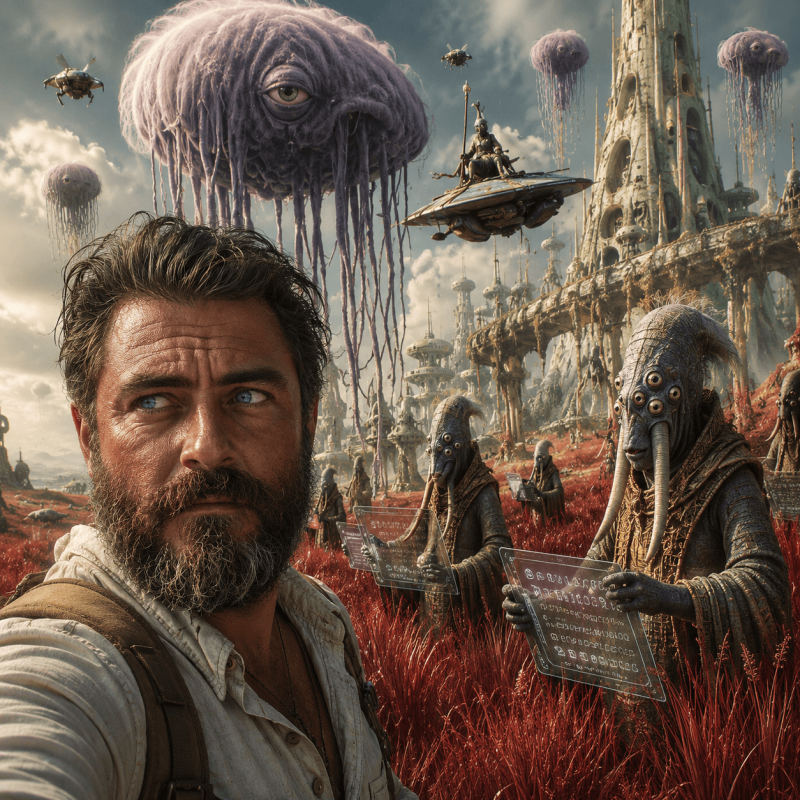
Instead, I sat at a small table outside, watching the light shift across the buildings, and decided that if I had nothing to report from this world, I could at least share something from another.
There is an Earth, catalogued under a code I no longer remember because the locals had a better system: they named their worlds after what they could dig out of them.
On that Earth, fruit does not grow.
It is mined.
They call it banana ore.
Miners descend into soft, fragrant tunnels where the walls carry faint yellow veins. At first, the material is hard, almost stone-like, with a dull, matte surface. When extracted and brought to the air, it begins to change. Slowly softening, warming, releasing a scent that is unmistakably banana, but deeper. Older.
The best seams produce what they call dessert-grade ore. Perfectly balanced sweetness, a texture that yields without collapsing. There are entire economies built on it. Disputes over territory. Quiet pride among miners who can read the ground the way others read books.
I once watched a foreman crack open a fresh piece with a small hammer. The inside was pale gold, perfectly formed, as if it had been waiting for that exact moment to become what it always was.
In the same world, there are layers of chocolate shale.
Thin, brittle sheets embedded in rock, stacked like geological pages. You peel them off carefully, because they break easily, and each layer has a slightly different flavor depending on depth. The upper layers are light, almost milky. Deeper ones become darker, richer, with a bitterness that lingers just long enough to be interesting.
They do not rush when extracting it. You cannot rush chocolate shale. It rewards patience and punishes carelessness.
And then there is butter coal.
It burns.
Not violently. Not destructively. Slowly, steadily, with a soft golden flame that gives off both heat and the faint, comforting smell of baked pastry. Entire towns use it for warmth. Kitchens are built around it. There is something deeply reassuring about a fire that smells like something you could eat.
I spent a winter evening there once, sitting in a room warmed by butter coal, eating freshly baked bread and banana ore that had just finished ripening. Outside, snow fell quietly. Inside, everything felt… sufficient.
No urgency. No noise. Just a world that had decided, collectively, to be a little kinder to those living in it.
Back in Lviv, the light had shifted again.
My coffee was gone. My head was clear. The city continued, as it always does, somewhere between history and habit.
I had nothing else to report.
And for today, that was more than enough.
— Marco