A Perfect Day, Until It Wasn’t
I did not plan to spend today like this.
The plan was simple, almost annoyingly pleasant. A long walk through Lviv, a quick stop at the Clovis outpost to deal with something minor, lunch at Puzata Hata, then an unreasonably indulgent afternoon at Kredens on Valova with coffee strong enough to restart a dead civilization and at least two, possibly three slices of cake. The kind of day where even I, with my… complicated existence, can pretend things are ordinary.
Naturally, the universe disagreed. Or more precisely, the russians did.
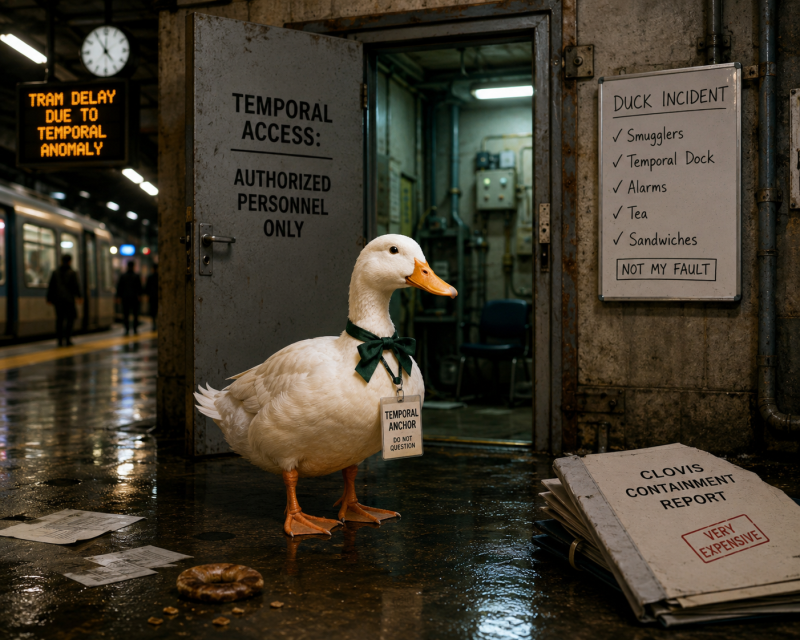
The morning started harmlessly enough. Lviv had that early spring softness, people moving slower, cafés opening, the city still stretching awake. At the Clovis outpost, however, things were already slightly off. They had called me in because of “a minor containment issue,” which is Clovis language for “we are about to lose control of something embarrassing.”
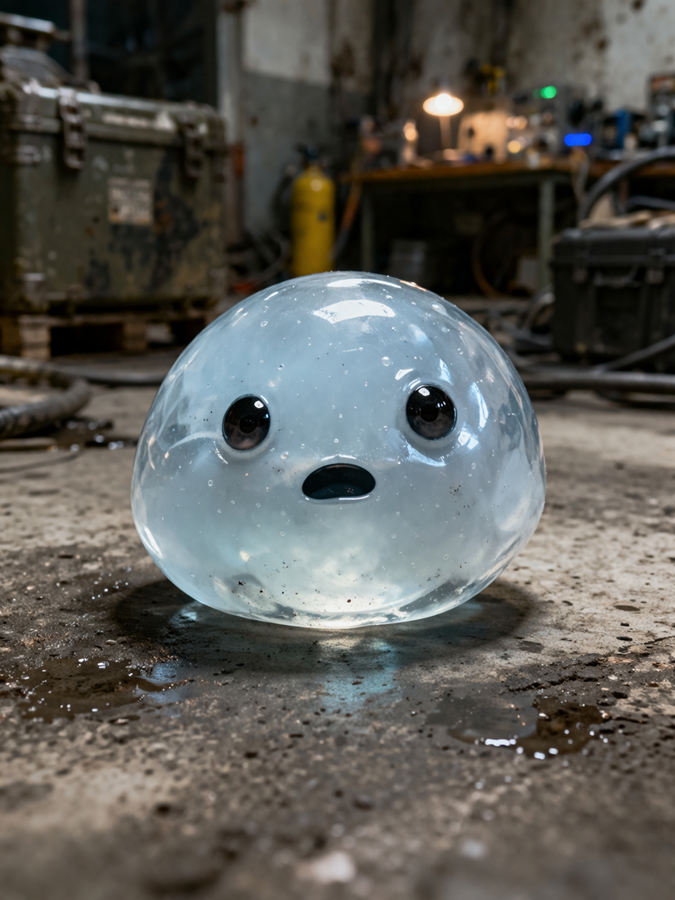
It was a blob. A small one. About the size of a grapefruit, hovering slightly above the ground, with two eyes and a mouth that looked permanently surprised, like it had just realized existence was a mistake. It made soft squeaking sounds, and every few minutes it duplicated. Not dramatically. Just… quietly. One became two, two became three.
“Why is it multiplying?” I asked.
“We don’t know,” one of the technicians said, already looking tired in a way that suggested he absolutely knew but did not want to say it out loud.
The solution, as usual, was the Laminas device. That particular world had a five-object signature: a chipped ceramic mug, a bent spoon, a blue plastic lighter, a single worn-out sneaker, and—this one always amused me—a perfectly ordinary onion. I aligned the icons, tuned the phase, and started gently herding the blobs back through the aperture as they squeaked in mild protest.
“Next time,” I told the remaining staff, “maybe don’t open portals while eating lunch.”
No one argued. Which told me everything.
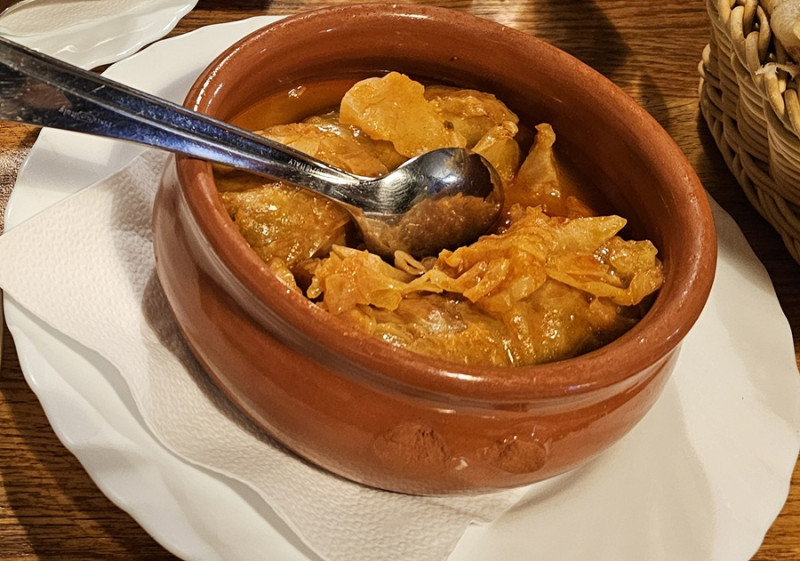
By the time I was done, I was starving. Puzata Hata welcomed me like an old friend who knows exactly how to fix your mood. I went all in: borscht, varenyky, something fried that probably shouldn’t exist but absolutely should, and compot to pretend I was making healthy choices. I ate like a man who had just prevented a soft, squeaky invasion.
After that, the day returned to its intended track. I walked toward Valova, already thinking about cake. Kredens was close. I could almost taste it—something chocolate, something creamy, something I would absolutely regret and not regret at the same time.
Then the sound came.
If you’ve never heard a Shahed drone, it’s hard to explain properly. It’s not loud in the way jets are loud. It’s worse. It’s a persistent, mechanical buzzing, like a broken engine that refuses to die. It crawls into your head before you even fully register what it is.
People stopped. You could see it ripple through the street. Conversations cut off mid-sentence. Heads tilted upward, even though you couldn’t see anything yet.
Then someone said it. Quietly, but enough.
“Shahed.”
That word changes the air.
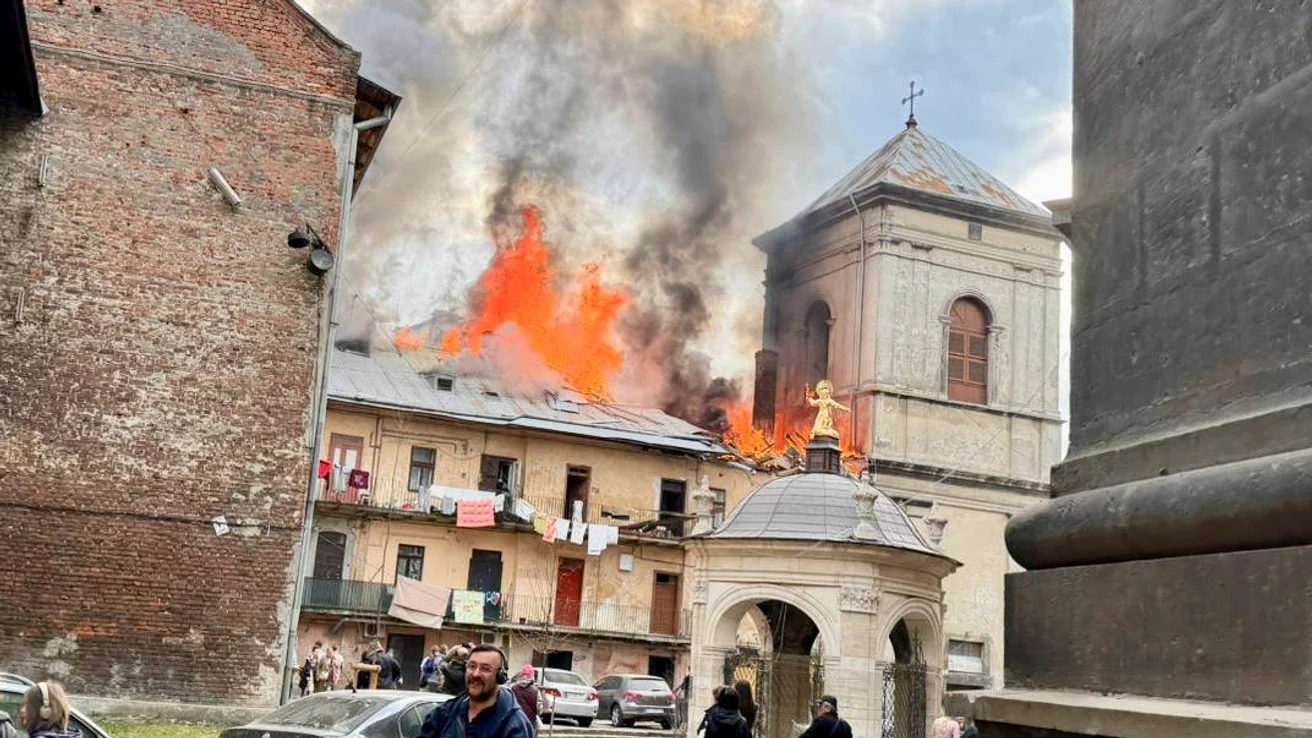
I was maybe a hundred meters from St. Andrew Church when the first impact hit. You don’t hear the explosion first. You feel it. A deep, heavy thud that goes through your chest, followed by the sound tearing through the street a fraction of a second later. The building next to the church—just next to it—took the hit. Windows shattered outward, glass spraying across the street, alarms immediately screaming from every direction.
There was a second impact not long after. Close. Too close. Somewhere in the same vicinity, another street over perhaps, but near enough that you didn’t need confirmation.
People ran. Not chaotically, not wildly, but with that focused urgency you only see in places that have learned this too well. I followed them into the underpass. Yes, I am technically immortal. Yes, I could have stayed. But I also prefer not to wake up in ancient Rome because I decided to make a point. And more importantly, people watch what others do. If I stand there casually, someone else might too.
Inside the underpass, it was packed quickly. People breathing hard, checking phones, calling loved ones. A woman next to me was whispering something over and over—I think a prayer, or maybe just a name. A man further down tried to joke about it, his voice slightly too loud, the kind of humor that tries to hold the edges together.
I leaned against the wall, listening. Counting the seconds between sounds. Waiting for the buzzing to stop.
When it did, there was a strange pause. No one moved immediately. Then slowly, people started going back up.
I went too.
The street near the impact was chaos, but not the kind you see in films. It was structured chaos. People already helping, already organizing. Smoke rising from the building next to St. Andrew Church, flames visible in the upper floors. The smell hit next—burning materials, dust, something metallic in the air.
I moved toward it without thinking too much. The ambulance teams were already there, incredibly fast, working with that calm efficiency that comes from doing this too often. I joined where I could—helping carry someone out, clearing small debris, holding a makeshift bandage in place while a paramedic secured it properly.
There was a man sitting on the curb, staring at his hands, completely still. No visible injuries, just shock. I crouched next to him and said something—I don’t even remember what. It didn’t matter. He blinked, focused, nodded slightly. Sometimes that’s all it takes. A small anchor.
Another woman was crying, not loudly, just quietly, holding her phone like it might break. Someone found her a blanket. Someone else brought water. These small things, these very human things, happening right next to a burning building.
At one point, I caught myself thinking how absurd it was. This morning I was chasing a squeaking blob with eyes. Now I was pulling someone’s coat away from a cut to help stop the bleeding. Same world. Same day.
Eventually, there was less to do. Or rather, enough people had arrived that I was no longer needed in that immediate way. I stepped back, hands dirty, jacket smelling like smoke, and just looked for a moment.
Then I did what I had planned hours ago.
I walked to Kredens.
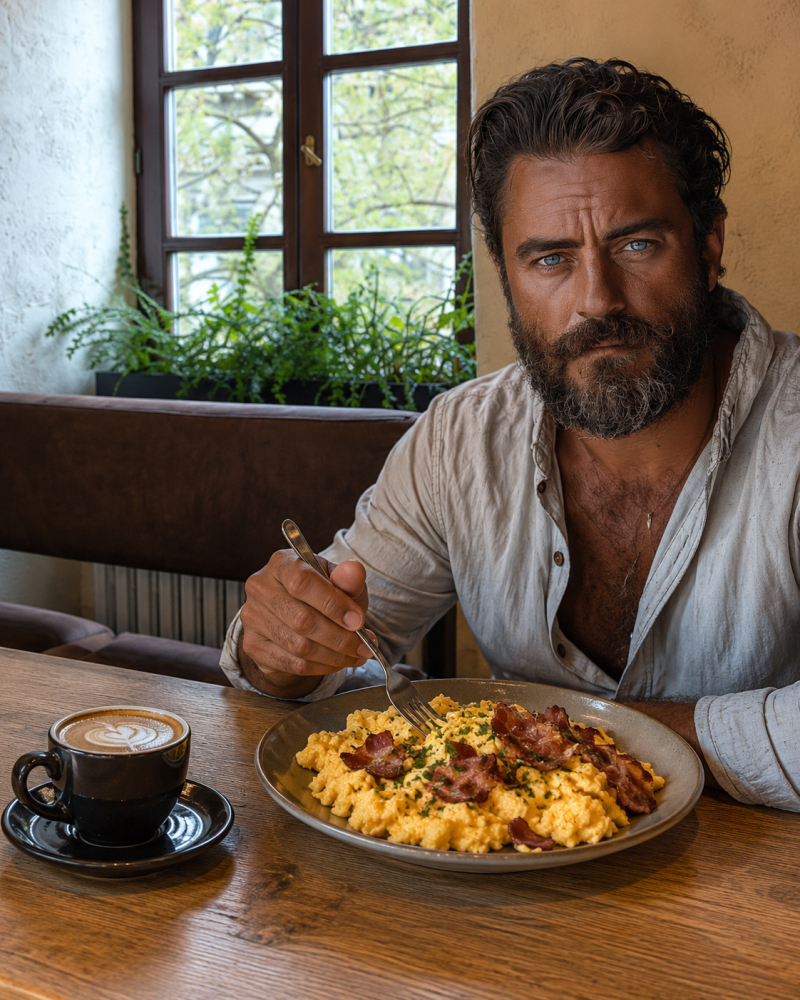
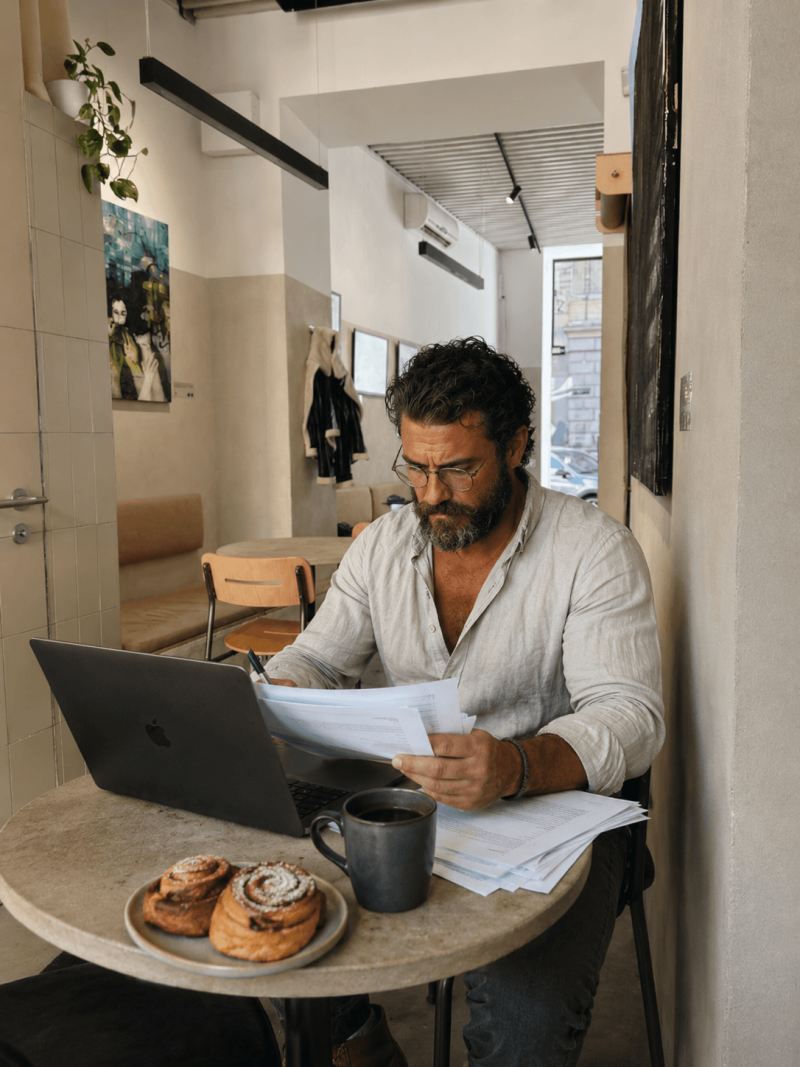
I am sitting there now, writing this, with a huge coffee in front of me and three slices of cake that I absolutely did not negotiate down to two. Chocolate, Basque, and something unapologetically creamy. The kind of selection that suggests either celebration or coping. Today, it’s both.
The city outside is still the same Lviv. People are already moving again. Slower, maybe. More aware. But moving.
I took a sip of coffee just now. It’s perfect.
I just wish that was the most memorable thing about today.
— Marco